Strengthened immunity
Regular exposure to fresh air, temperature variations, and microbial diversity gently trains toddlers' immune systems.
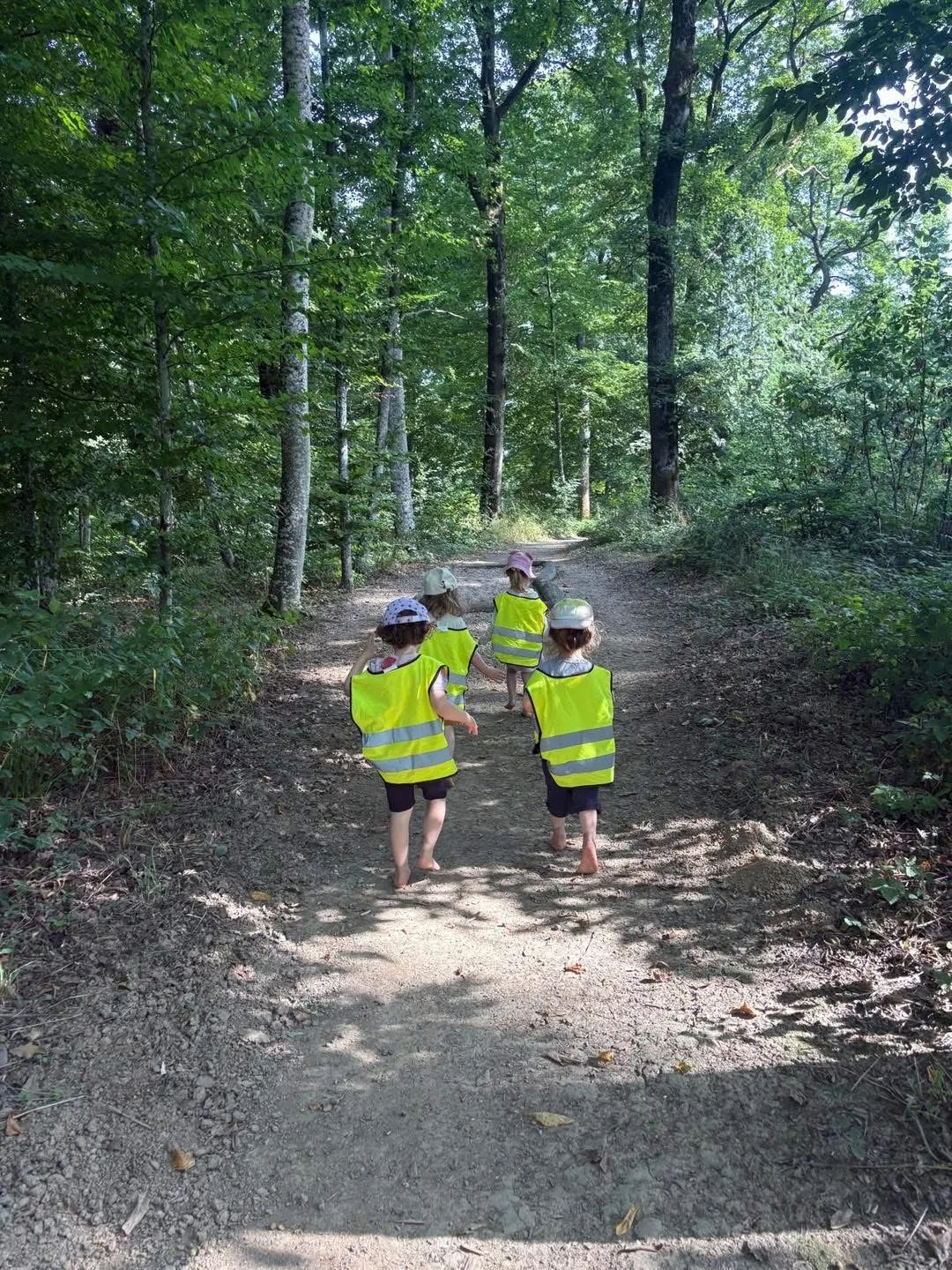
Not a trend, not a slogan. A conviction rooted in twenty years of research in neuroscience and developmental psychology.
At Schnick Schnack Schnuck, children spend an average of 3 to 4 hours a day outdoors, in all weather. This foundational choice has measurable effects on their development. Here are the six that science observes most.
Regular exposure to fresh air, temperature variations, and microbial diversity gently trains toddlers' immune systems.
Climbing, jumping, running, handling seeds, transferring soil, nature offers an infinitely richer playground than a classroom.
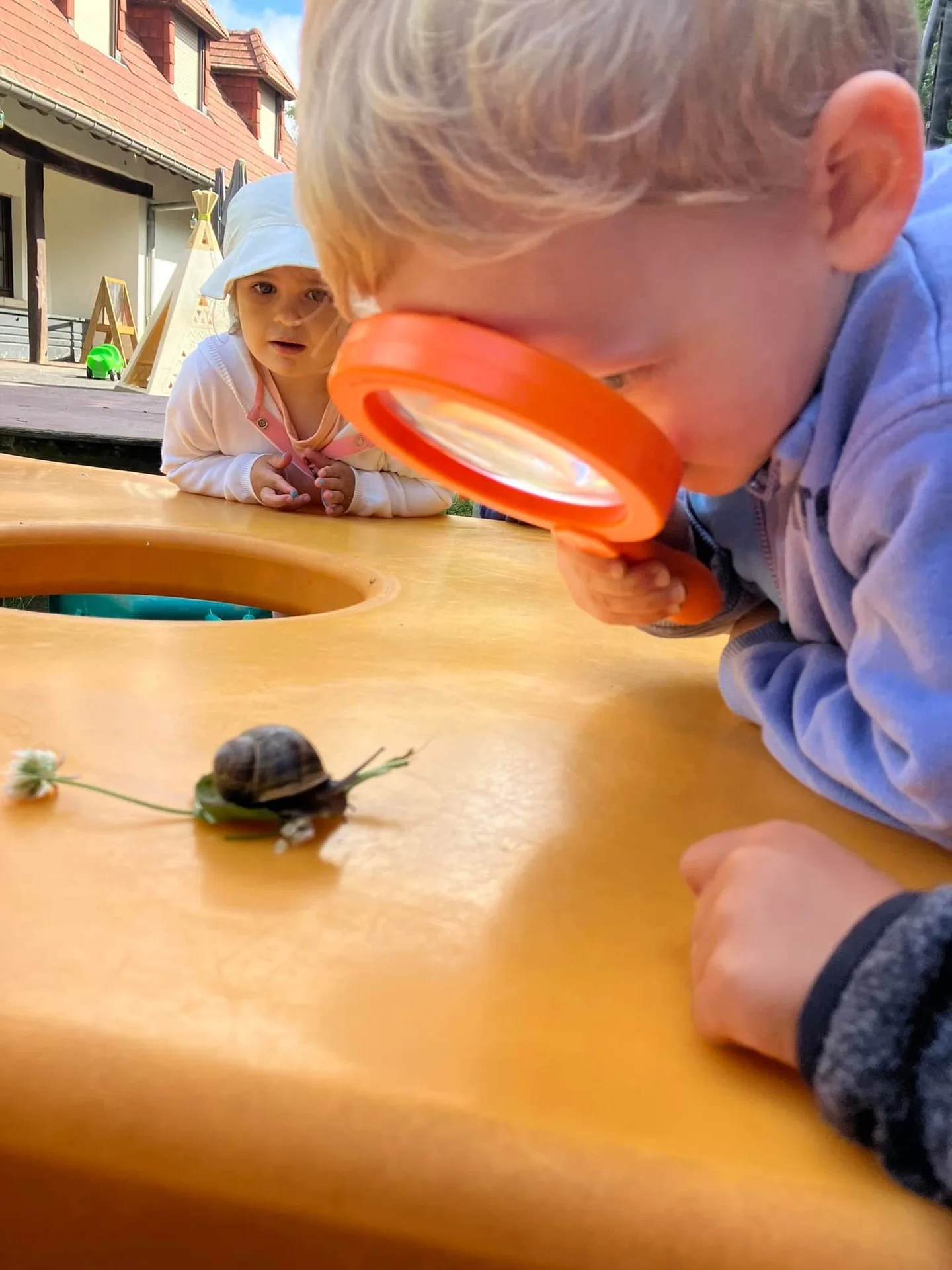
Research is unanimous: children exposed to nature daily develop more stable attention and a richer vocabulary.
A stick becomes a spoon, a leaf becomes a plate. Nature imposes nothing, it lets the child's imagination trace its own path.
Contact with the elements eases tension, lowers cortisol, and teaches children to recognise and name their own states.
We only protect what we know and love. A childhood lived with feet in the soil shapes adults who respect all living things.
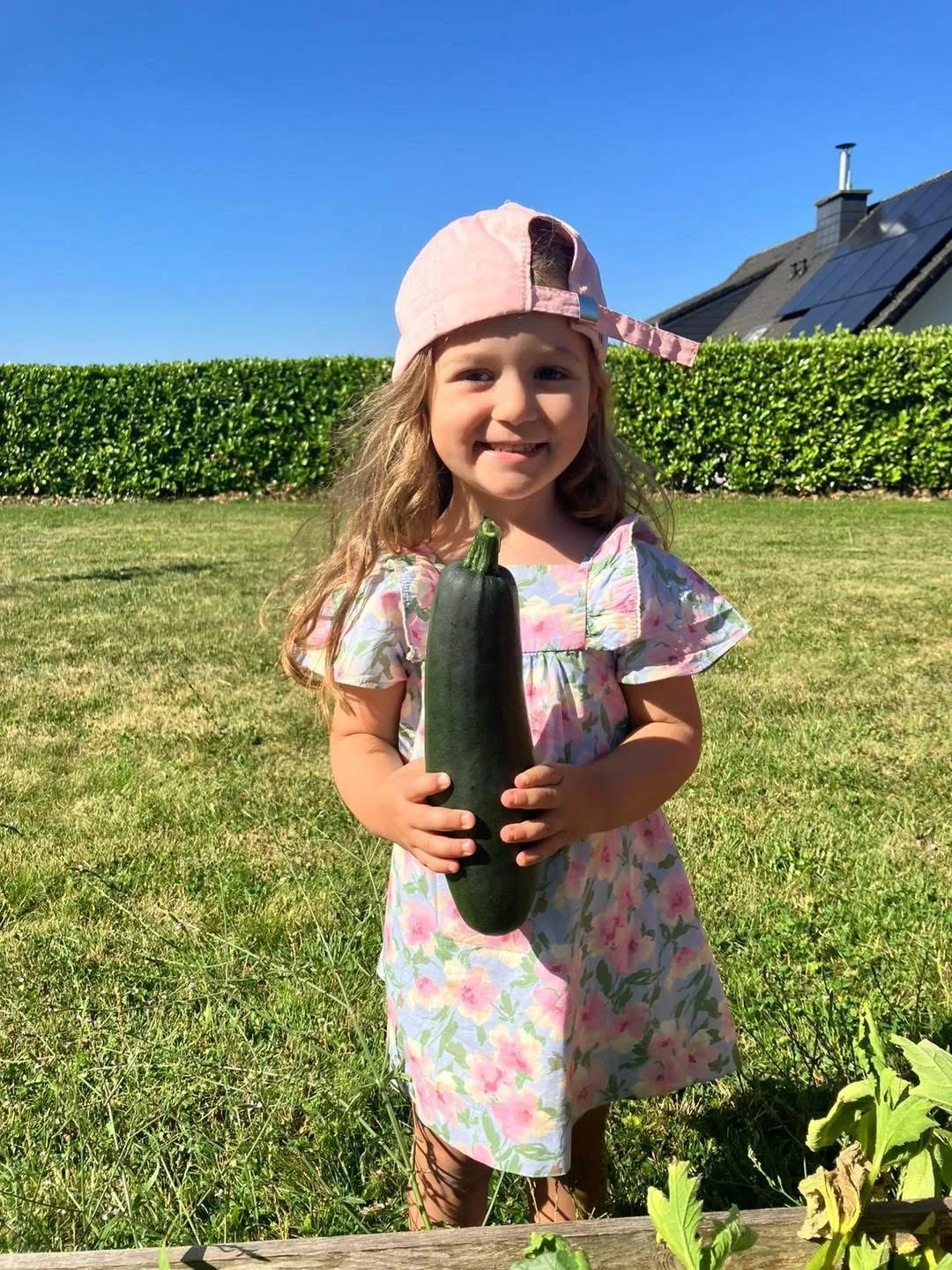
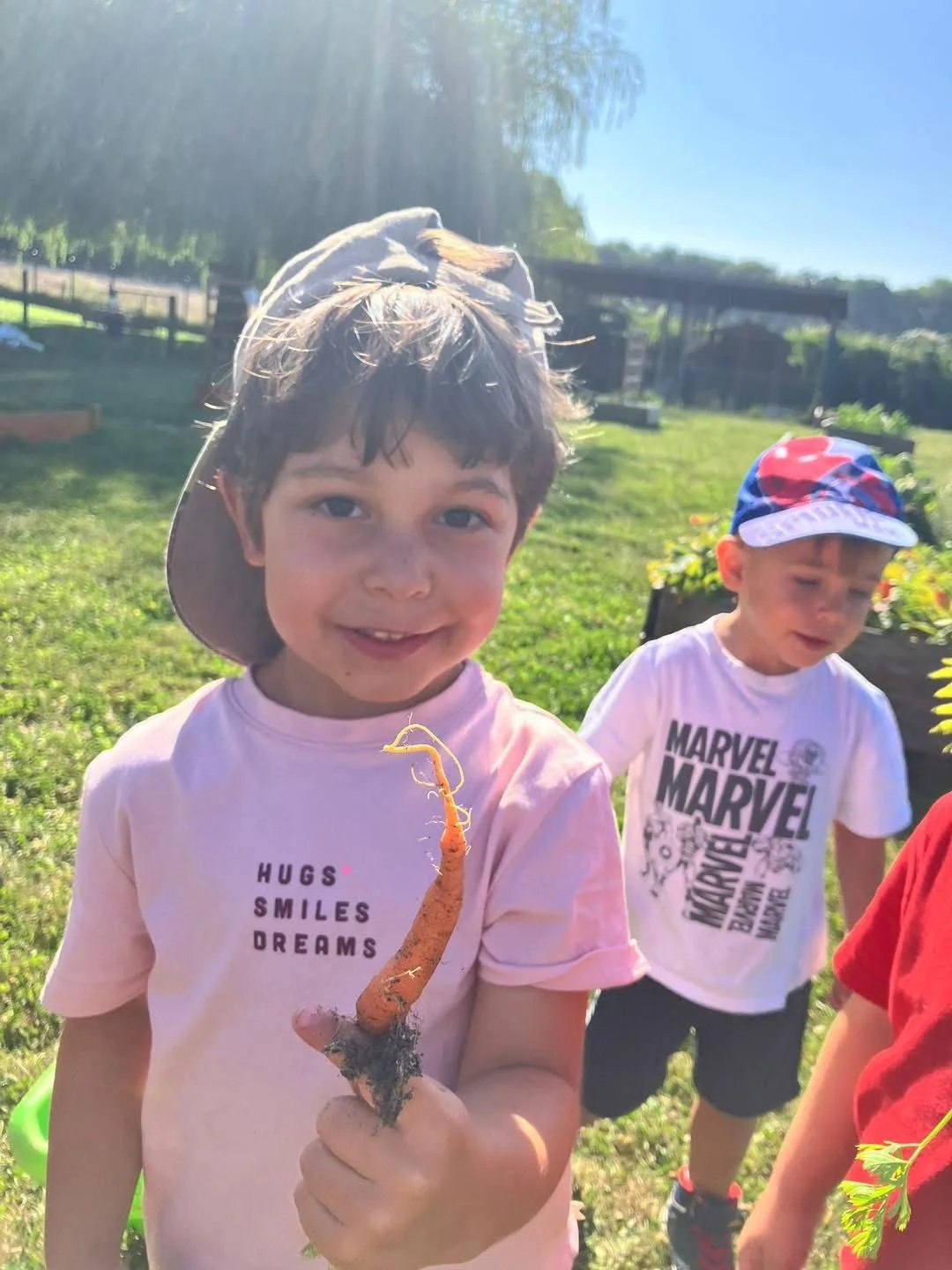
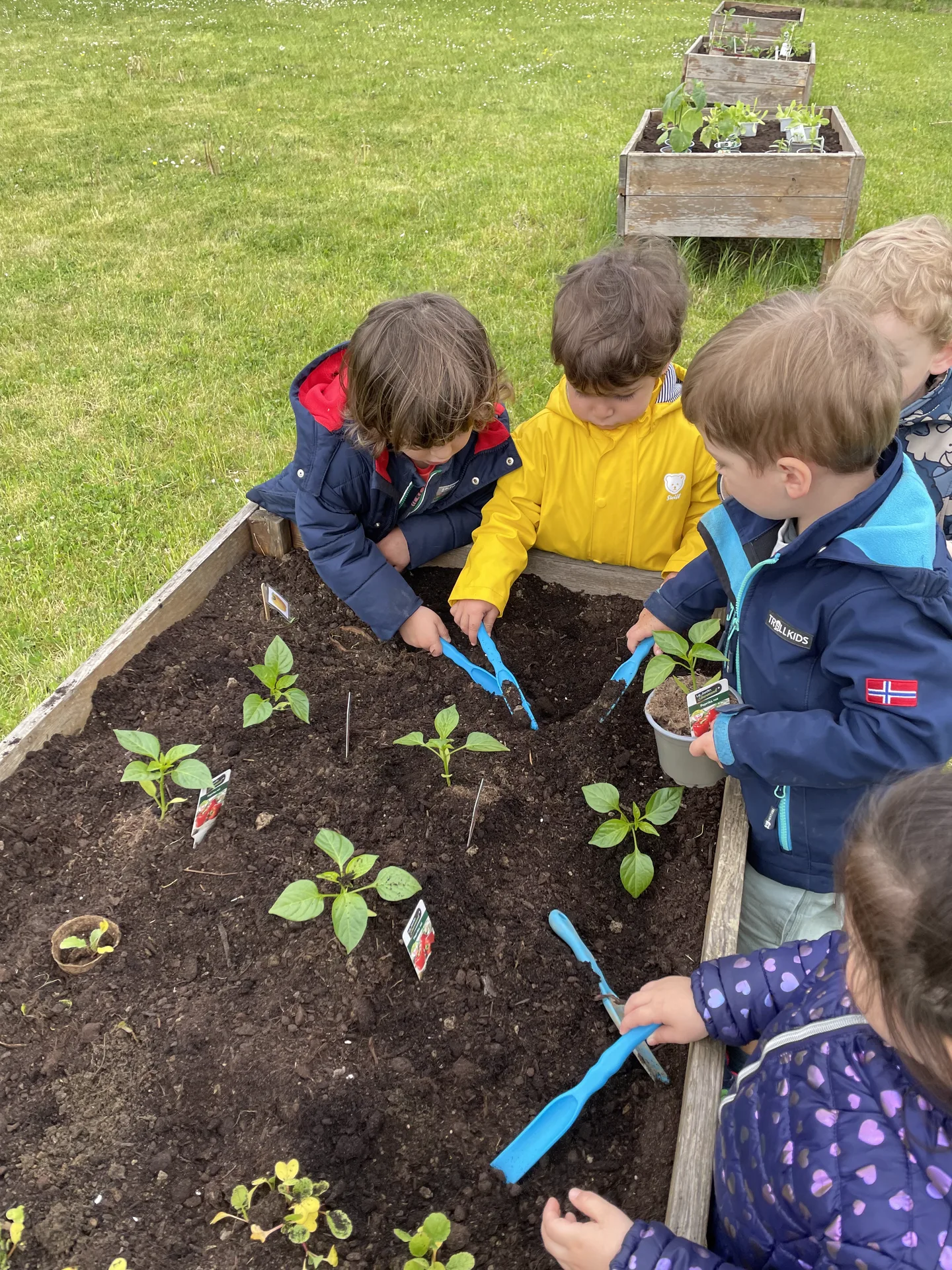
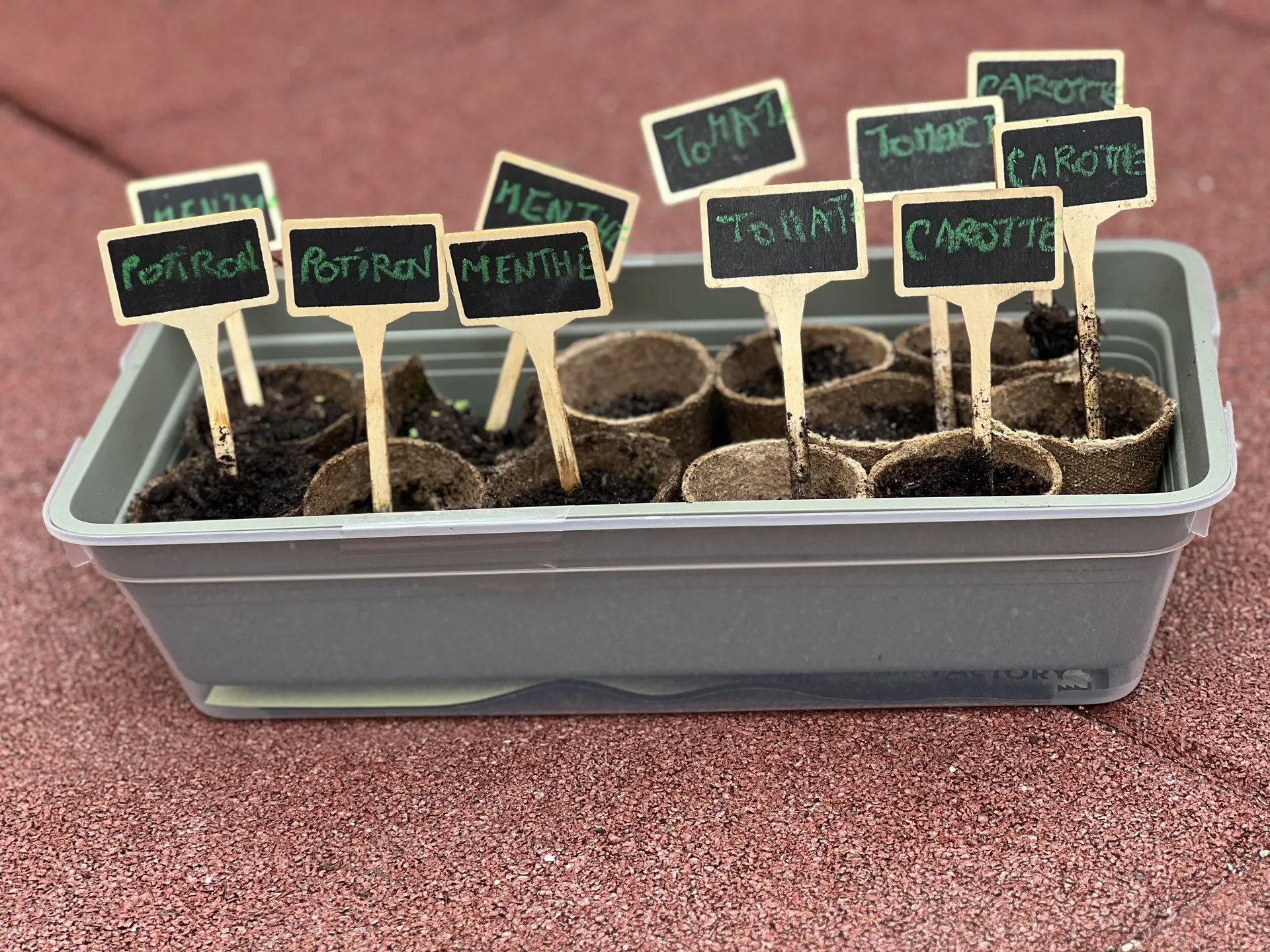
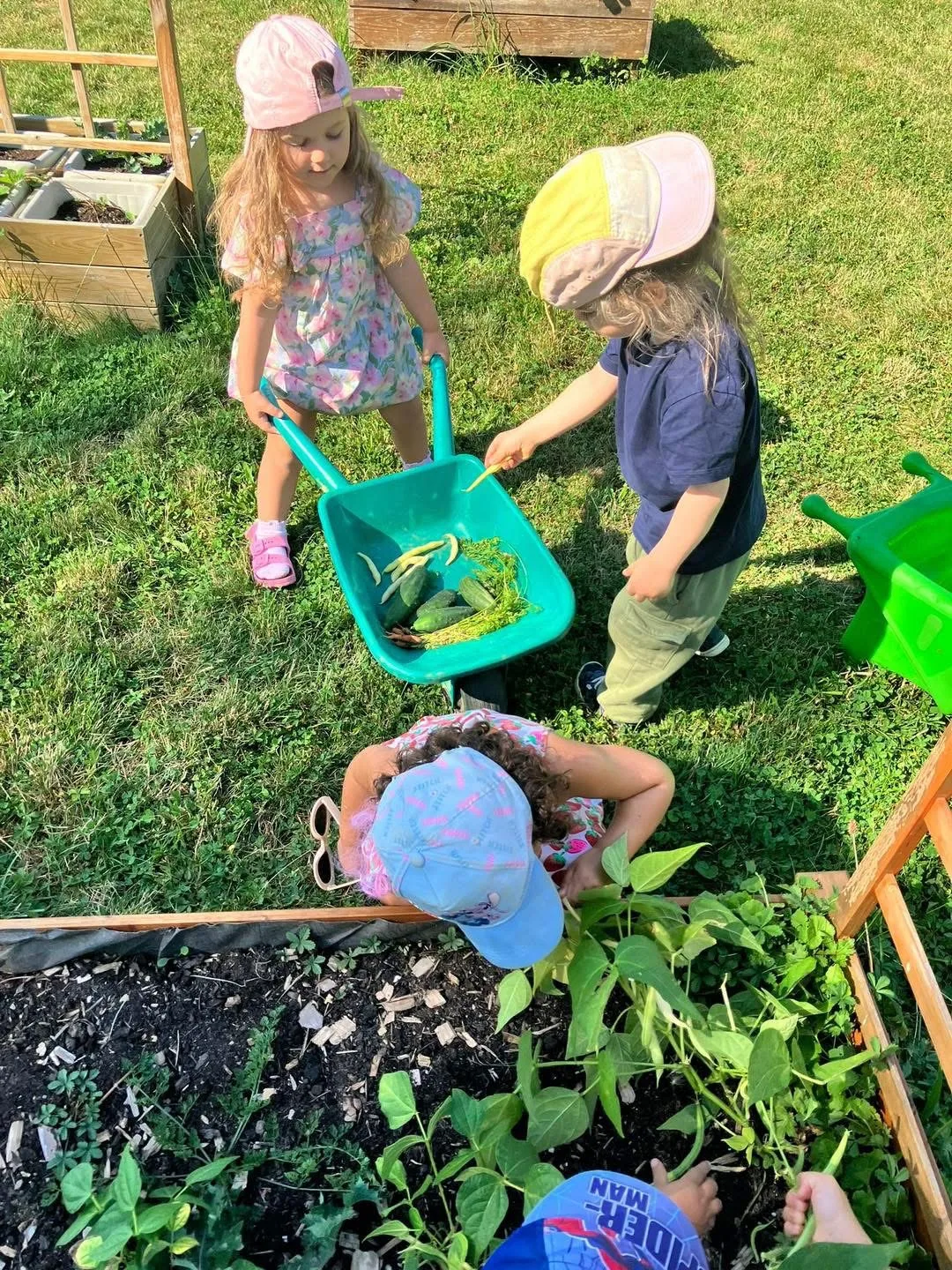
Children take part in the life of our vegetable garden: sowing, watering, harvesting. The harvested vegetables are used in educational workshops for taste discovery, sensory awakening and cooking activities with the children. A real connection between earth and plate, awakening their curiosity and respect for nature.
Sow, tend, harvest, taste.
Caring, observing, respecting
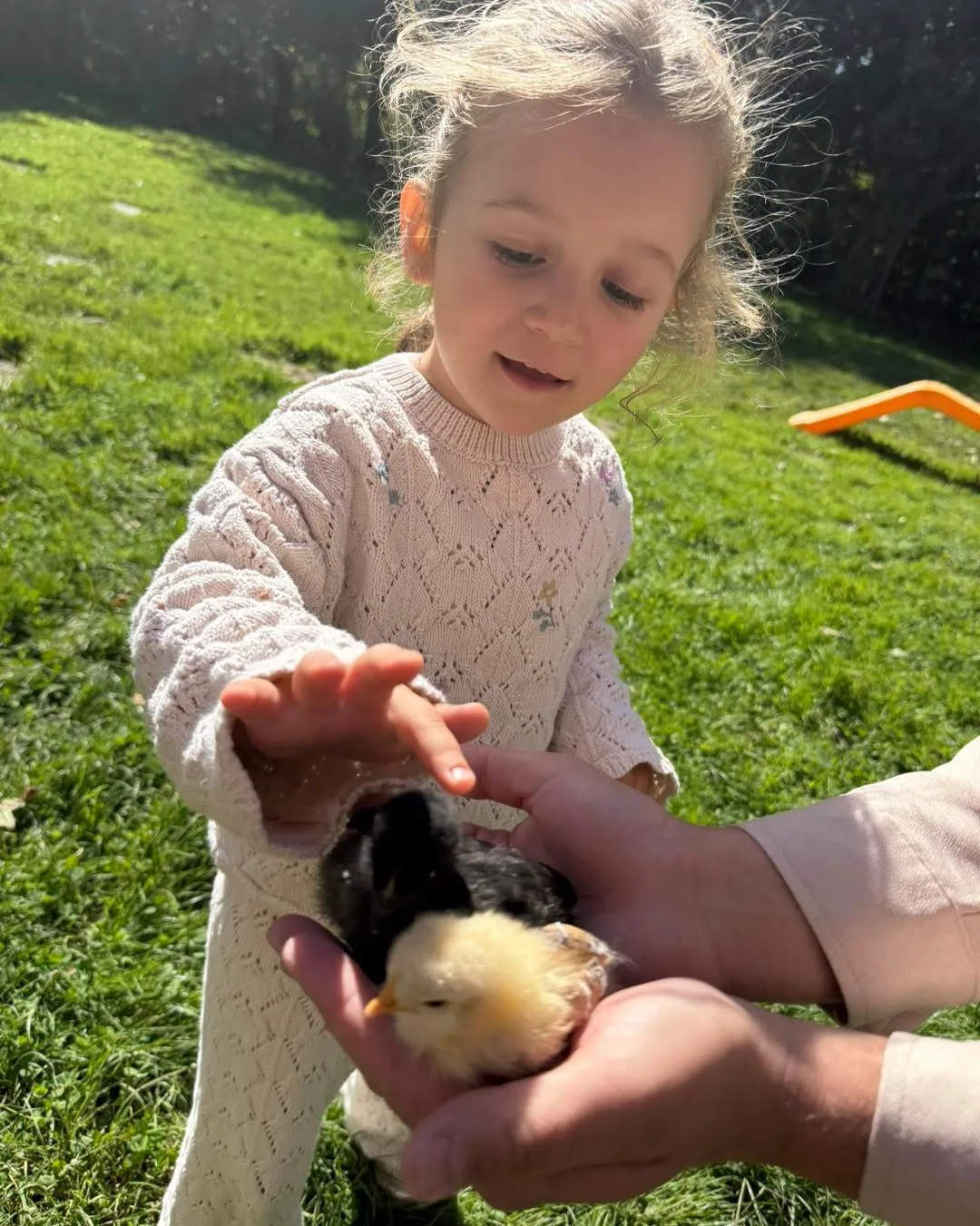
Our hens live right next to the children. Giving them water, gathering eggs, watching how they walk or admiring their feathers — these are small everyday rituals.
Depending on the laying, the fresh eggs are shared with the families. A simple, tangible bond between the crèche, nature and home.
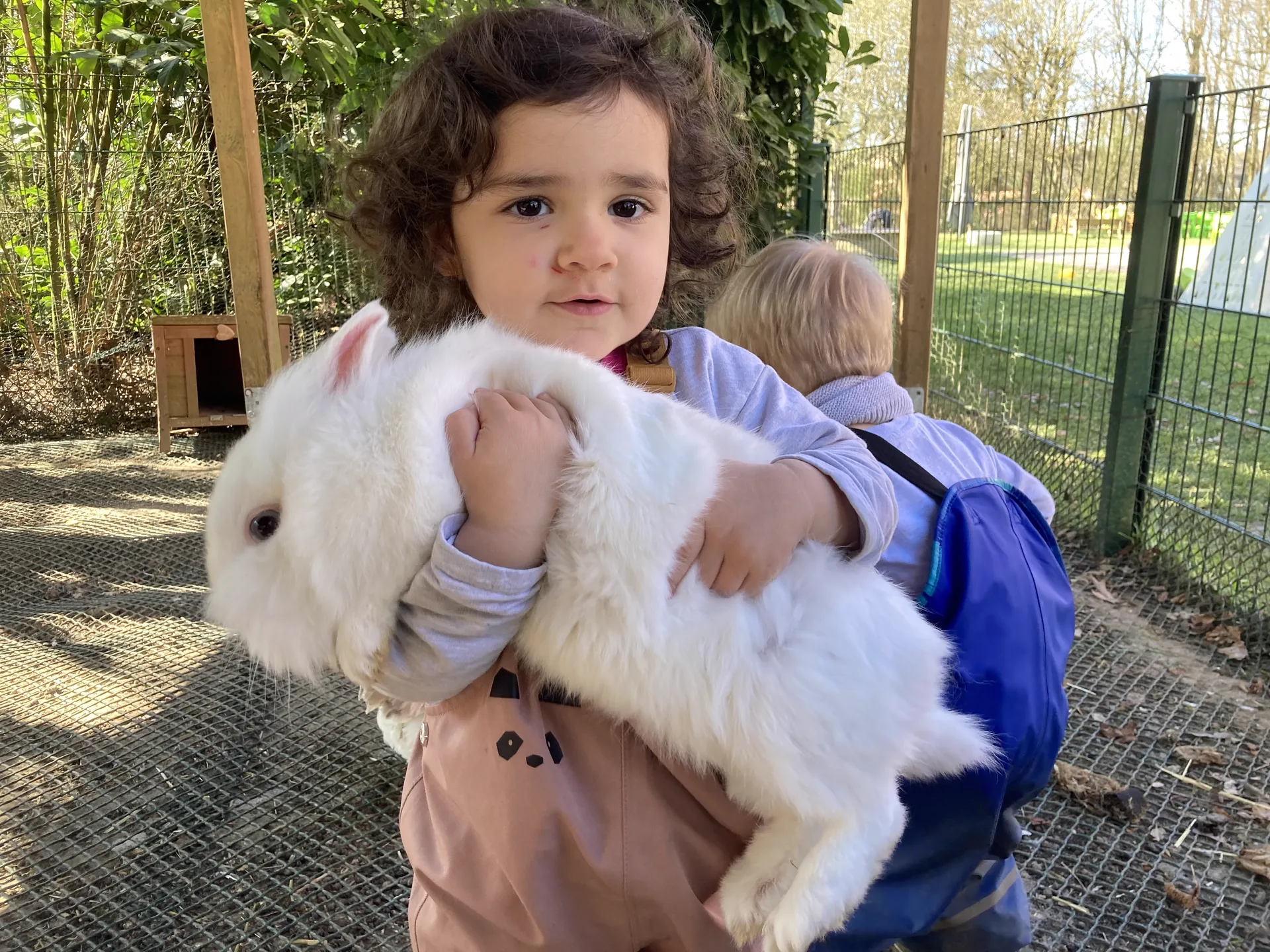
Living close to animals means learning gentle gestures, patience and respect for a creature whose needs are different from our own.
"A child needs mud, sticks, stones, dead leaves, and bad weather just as much as they need protein, vitamins, and love."
Adapted from Angela Hanscom, occupational therapist
This site uses no analytics at all. We only need your consent to display the Google Maps maps, which send your IP address to Google.